 WhatsApp
Drain jetting sends controlled high-pressure water through a specialist hose and nozzle to break up and move debris through suitable pipes. Good jetting is not just about pressure—it depends on access, nozzle choice, pipe condition and confirming the result.
What drain jetting actually does
A jetter uses a high-pressure pump, hose and purpose-designed nozzle. Rear-facing jets help propel the hose through the line and move loosened debris back toward an access point, while the nozzle configuration is selected for the blockage and pipe.
It is commonly used for grease, sludge, scale, accumulated debris and some root intrusion.
Why it can clean more than a small opening
A cable or basic rod may create a path through certain blockages. Jetting can wash material from a larger portion of the internal pipe surface, which can be helpful when build-up extends along the line.
The correct method still depends on the pipe condition. More pressure is not automatically better.
Nozzle choice matters
Different jetting nozzles behave differently. Some are designed to penetrate a blockage, some to clean pipe walls and others to work on heavier deposits or roots. The technician chooses the tool based on access, diameter, material and what is believed to be inside the line.
Why pipe condition should be considered
A damaged, badly displaced or collapsed pipe may not be a simple jetting job. If the line is known or suspected to be structurally compromised, the technician may need to inspect it and adjust the approach.
This is one reason CCTV inspection is valuable on recurring or unusual blockages.
Jetting plus CCTV is a strong diagnostic combination
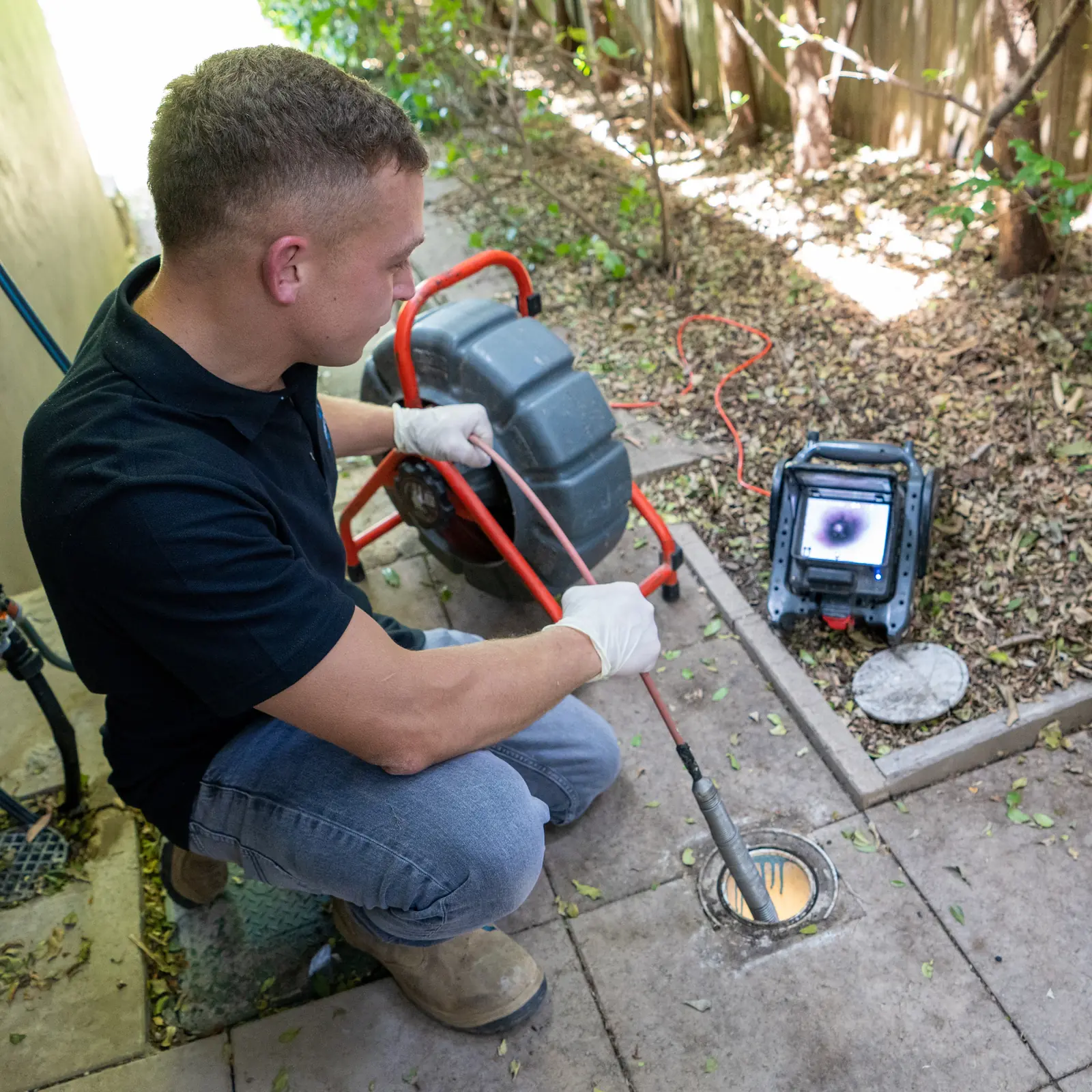
Jetting can restore flow and clean the line; CCTV can then show what remains. That makes it easier to see roots, cracks, failed joints or a section that continues to hold debris after clearing.
For the service itself, see high-pressure drain jetting.
What happens during a typical jetting job
The technician first identifies a suitable access point and considers what is likely to be blocking the line. The hose and nozzle are fed into the pipe while water pressure is controlled from the machine. The nozzle both cuts or loosens material and moves debris toward a point where it can be removed or carried safely through the drainage system.
After the restriction is cleared, additional passes may be used to clean the pipe walls. On recurring blockages, the line can then be inspected by CCTV once visibility is good enough.
Why “maximum pressure” is not the objective
Effective drain jetting is a combination of flow, pressure, nozzle design, technique and pipe condition. A technician wants enough energy to remove the target material without using an unsuitable method for the pipe. The correct setup for greasy kitchen waste is not necessarily the same as for roots or heavy silt.
This is also why jetting should be treated as specialist drain equipment rather than a generic pressure-washing task.
Common questions about drain jetting
Can jetting cut tree roots?
Specialist nozzles can remove some root intrusion from suitable drains. The next question is how the roots entered the pipe; CCTV can show the crack or joint that may allow them to return.
Can jetting damage pipes?
Any drain-cleaning method must be matched to pipe condition. A professional should consider the material, age and suspected defects before choosing the technique and pressure.
Is jetting better than an electric eel?
Neither tool is universally best. The blockage type, access and pipe condition determine the appropriate method. See our jet blasting vs electric eel guide for a direct comparison.
Why inspect after jetting?
A clean line gives the camera a better view of cracks, roots, displaced joints and sections that hold water. This helps separate a one-off obstruction from an underlying structural fault.
When jetting may be recommended
Johnny Drains may use jetting for suitable blocked sewer and stormwater drains where grease, sludge, scale, debris or root intrusion is involved. The exact method is chosen on site after assessing access and pipe condition. Service is available across Sydney’s Northern Beaches and Lower North Shore.